Terrazzo Outdoor Dining Tables Are The Fastest-Growing Commercial Table Category
Outdoor dining is no longer a seasonal side project for restaurants. It is a permanent revenue line, and the furniture decisions behind it have moved to the center of the capital-expenditure conversation. Industry data tells the same story from every angle: 70% of restaurants added outdoor seating in recent years, roughly 90% of those operators intend to keep it, and platforms such as OpenTable have tracked outdoor dining up 19% year over year. In a 2026 survey of restaurant development and design professionals, 70% said outdoor dining is now expected in new builds and remodels whenever space allows.
That permanence changes what “outdoor table” actually means. A folding-top bistro table purchased for a temporary patio is not the same asset as a dining surface that must survive daily service, year-round weather, and the visual scrutiny of guests who photograph every corner of the room. Among commercial dining tables specified for outdoor service, one material category is outpacing the rest in specification and repeat purchase: terrazzo outdoor dining tables.
This is not a niche aesthetic experiment. It is a structural shift in how restaurant groups, hotel terraces, and multi-unit hospitality operators think about the single most-touched surface in the outdoor dining room.
Why Terrazzo Moved From Floor to Tabletop
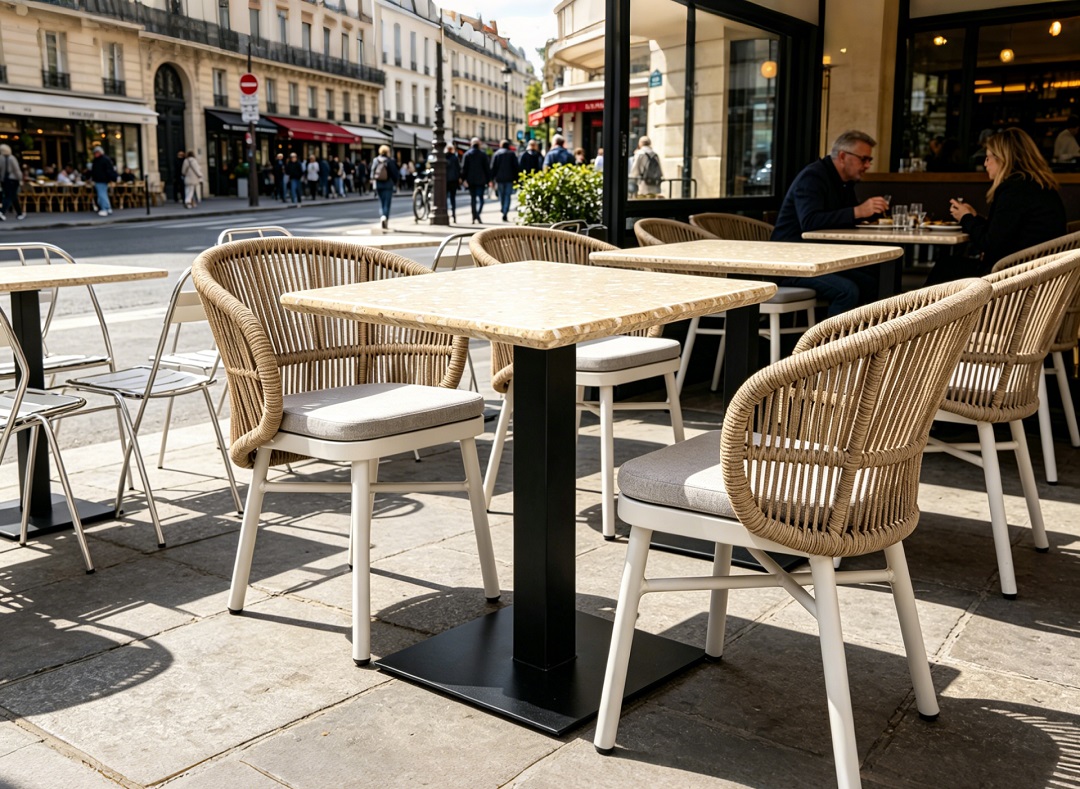
Terrazzo spent years as a flooring and wall material — speckled hotel lobbies, café countertops, statement bathroom surfaces. The furniture crossover began as small accessories and trays. What has changed is the scale and the commitment. Design studios are now casting full dining table tops in poured terrazzo, with pieces running up to 96 inches long and aggregate mixes specified for individual projects. A solid terrazzo dining table can weigh 400 to 600 pounds depending on thickness and aggregate density. That is not an impulse buy. It is a structural decision about a room, which is exactly why it is appearing in commercial specification schedules rather than only in residential design features.
The visual logic is straightforward. Terrazzo offers something that few other commercial table surfaces can match: depth without demanding attention. A polished terrazzo surface reveals aggregate chips, marble fragments, glass, or shell in a matrix that reads as complex from close range but resolves into a calm, unified plane from across the patio. Design professionals increasingly recognize that this visual complexity photographs exceptionally well and holds up to physical inspection — a dual performance that matters when guests encounter a space first on a screen and then in person.
For restaurant operators, that translates into a table that functions as both furniture and atmosphere. A terrazzo top anchors a patio without competing with the food, the landscaping, or the brand palette. It is neutral enough for a minimalist seafood terrace and textured enough for a warm, maximalist wine bar. It is the rare commercial surface that designers specify for how it looks and operators approve for how it behaves.
The Operational Case: Durability That Survives the P&L
The fastest-growing category is rarely the cheapest category. Terrazzo outdoor dining tables command a premium per unit, and they earn that premium back in the operational realities of commercial hospitality. A quality terrazzo top is engineered for decades of outdoor exposure and ages without the chalky fade, rust bloom, or delamination that shorten the service life of lesser surfaces. It is dense, heavy, and dimensionally stable, which matters on an open terrace where wind, shifting bases, and daily table turnover punish lightweight furniture.
The surface itself is sealed and non-porous. Commercial terrazzo table tops are formulated to resist stains, scratches, heat, and moisture — the four failure modes that show up first in restaurant use. Red wine, olive oil, citrus, coffee, and hot plates are not edge cases in a dining room; they are Tuesday. A sealed terrazzo top wipes clean without requiring the dedicated scrubbing routine that porous stone or unsealed concrete demands. That directly reduces pre-service setup time and post-service labor, and it protects the capital investment from the slow cosmetic decline that makes a patio look tired before its time.
UV stability is the other quiet advantage. Resin tops have earned their place in high-turnover, lightweight applications, but terrazzo holds color and finish under sustained sun exposure without the surface degradation that can turn a matching set into a mismatched one after a few seasons. For an operator buying twelve or twenty tables at a time, color consistency across the floor plan is not a cosmetic detail — it is a brand-standard requirement.
Weight Is a Feature, Not a Bug
The first objection most buyers raise about terrazzo is weight. A solid terrazzo dining table is heavy, and heavy furniture requires planning. That weight, however, is precisely what makes terrazzo suited to commercial outdoor dining. A 400-to-600-pound table does not slide when a guest leans on it, does not rattle in gusty coastal wind, and does not telegraph every bump in the patio surface through glasses and flatware. Stability is the foundation of perceived quality in a restaurant, and terrazzo delivers it without the hollow resonance of thin metal or the flex of composite tops.
The practical answer is not to avoid weight but to match the top to an engineered base. A terrazzo top needs a base rated for the load, with mounting points that distribute stress and leveling feet that accommodate real-world patio surfaces. This is where the difference between a table-top vendor and a Commercial Outdoor Furniture Manufacturer becomes visible in the finished installation. CDG Furniture produces commercial table bases and tops as a matched system, including powder-coated aluminum bases designed for outdoor use with zero rust risk and load ratings that correspond to the actual weight of the terrazzo surface. The top is only half the asset; the base determines whether the table remains stable through years of service.
For operators who already have bases in place, replacement terrazzo tops can be specified to existing mounting patterns. For new builds and full patio refreshes, specifying top and base together eliminates the guessing that leads to wobble, premature wear, and callbacks.
Customization Is Where Terrazzo Outperforms Standard Commercial Tables
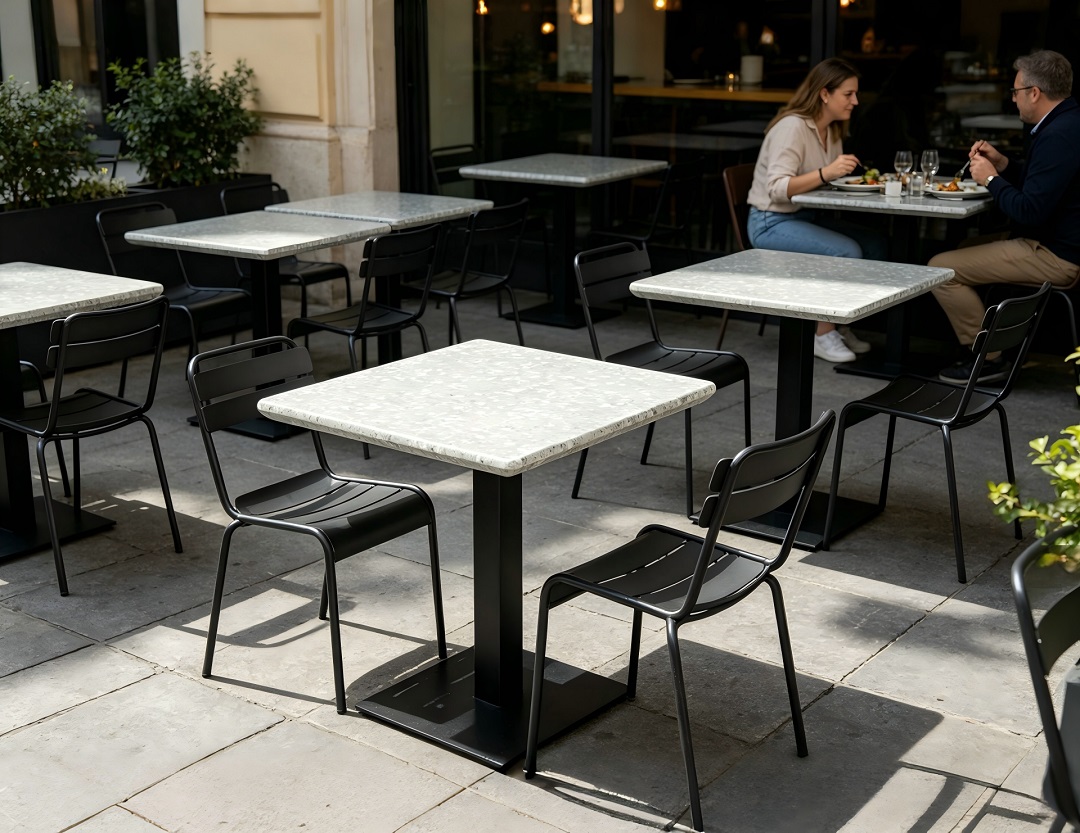
One reason terrazzo is growing faster than other commercial table categories is that it is specifiable. A standard laminate or resin top comes in a finite range of colors and edge profiles. A terrazzo top can be tuned at the aggregate level: chip size, chip color, matrix color, surface finish, edge detail, and thickness. That allows a restaurant group to build a surface that aligns with its brand rather than forcing the brand to accept a catalog default.
This is also where the supply chain matters. Not every terrazzo table sold into the commercial market is engineered for commercial duty. Some products marketed as “terrazzo style” are laminate or composite surfaces printed or coated to imitate the look. They may be acceptable for light residential use, but they do not carry the density, repairability, or outdoor stability of a poured or pressed terrazzo top built for contract environments. A Terrazzo Dining Table Supplier working at the commercial level should be able to document the aggregate composition, the binder system, the surface sealing method, and the recommended maintenance protocol — not merely supply a color swatch.
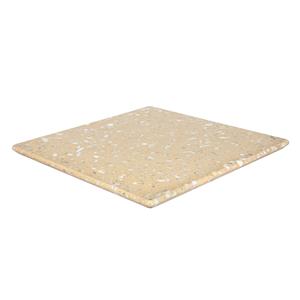
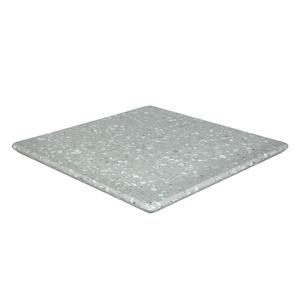
CDG Furniture’s terrazzo table-top range is built around this specification logic. Standard commercial sizes such as 90 cm square tops with controlled thickness are available, and custom dimensions, edge treatments, and aggregate palettes are developed for restaurant and hotel projects. Because the company operates as a Commercial Outdoor Furniture Manufacturer with in-house control over both tops and bases, customization does not stop at the surface. Table height, base style, and finish can be coordinated so the finished piece meets the operational requirements of the venue rather than forcing the venue to adapt to a stock item.
What Restaurant Buyers Should Evaluate Before Committing
The growth of terrazzo has produced a crowded supplier landscape, and not every offering is equal. For restaurant owners and procurement teams, the evaluation should move beyond the showroom sample and into the questions that predict service life.
First, ask what the top is actually made of.
Poured terrazzo, pressed terrazzo, and terrazzo-look laminate are different products with different performance envelopes. A commercial-grade terrazzo top should have a documented aggregate mix and a sealed, non-porous finish. If the supplier cannot explain the binder and the aggregate, the “terrazzo” label is doing more work than the material.
Second, ask how the top meets the base.
A terrazzo surface is only as stable as its mounting system. Commercial installations require a base with sufficient load capacity, corrosion resistance for outdoor use, and leveling capability. A supplier that sells tops without engineering the connection to the base leaves the operator to solve that problem on site.
Third, ask about repeatability.
A restaurant group specifying the same table for multiple locations needs color and aggregate consistency across production runs. Custom terrazzo is not a one-off art piece; it is a commercial component that must match the brand standard every time it is reordered.
Fourth, ask about outdoor-specific performance.
UV stability, freeze-thaw resistance where relevant, and salt-air tolerance are not universal across all terrazzo formulations. A supplier with real export experience across climate zones will know which formulations suit which environments and will specify accordingly.
This is the point at which the difference between a transactional table seller and a Commercial Outdoor Furniture Manufacturer with hospitality experience becomes measurable. CDG Furniture has supplied restaurant, café, bar, and hotel furniture to buyers in more than 160 countries, and the terrazzo range is positioned within that broader commercial outdoor furniture system rather than as a standalone decorative product. The company’s role as a Terrazzo Dining Table Supplier is backed by top-and-base engineering, custom production, and the kind of repeat-order consistency that multi-unit operators depend on.
The Category Is Growing Because the Math Works
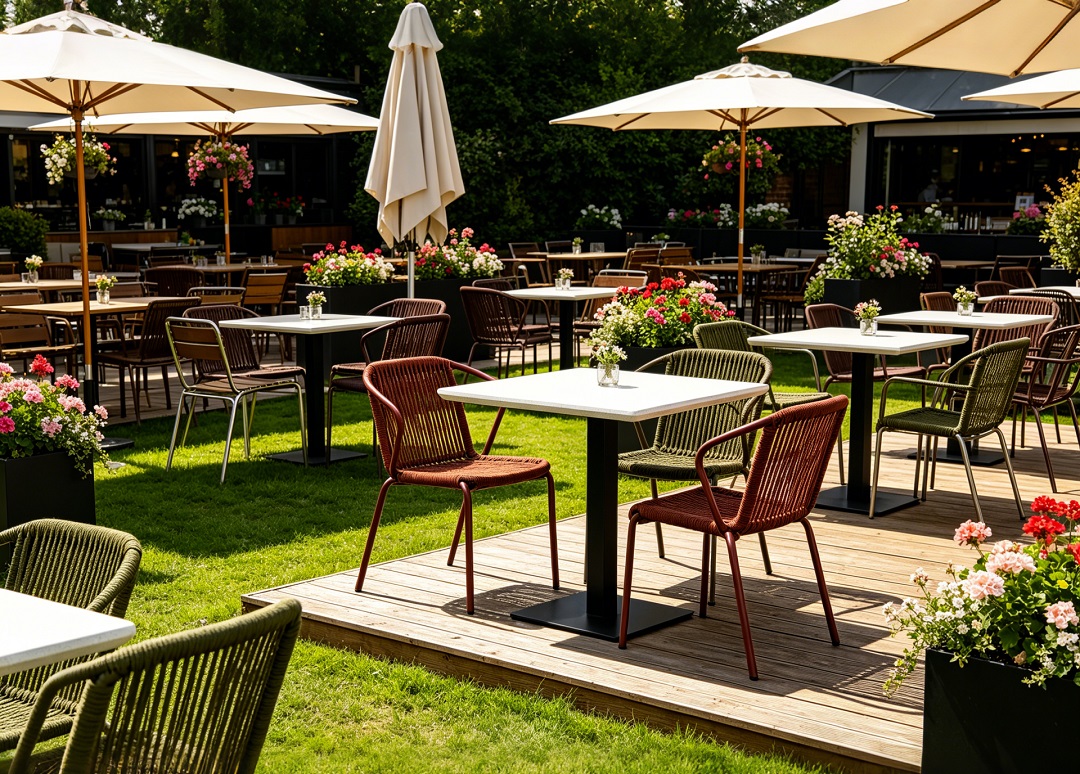
Terrazzo outdoor dining tables are not the fastest-growing commercial table category because of a design-cycle whim. They are growing because the lifetime math favors them in the environments where outdoor dining now lives: hotel terraces, rooftop restaurants, courtyard cafés, resort pool decks, and high-traffic patios that need to look considered rather than temporary.
A resin top may cost less on the purchase order. A wood top may carry warmer associations. But terrazzo occupies a specific intersection that commercial buyers increasingly prioritize: a surface that reads as premium, survives intensive daily use with minimal maintenance, remains dimensionally and visually stable outdoors, and can be customized to a brand standard rather than selected from a stock list. For an operator planning a patio as a permanent asset, that combination is difficult to replicate in any other single material.
The category is also benefiting from a broader shift in how outdoor spaces are designed. Restaurants are merging indoor and outdoor environments into a single continuous experience, and the furniture needs to hold its own on both sides of the threshold. Terrazzo moves comfortably between interior dining rooms and open-air terraces without looking like “outdoor furniture” that has been pressed into indoor service. That versatility expands its specification beyond the patio and into the entire dining footprint, which in turn drives the volume growth that defines a fastest-growing category.
Planning a terrazzo outdoor dining installation — or refreshing an existing patio with replacement terrazzo tops?
CDG Furniture has prepared a Commercial Terrazzo Table Specification Checklist for restaurant owners, designers, and procurement teams. It covers the exact questions to ask any terrazzo table supplier — aggregate composition, binder type, sealing method, base load matching, and repeat-order color control — so you can compare quotes on performance rather than appearance alone.
Send us your project details — venue type, approximate table quantity, preferred top dimensions, and target installation timeline — and our team will return the checklist along with a tailored terrazzo table recommendation for your space. Whether you need a single custom prototype or a multi-location rollout, we will map the specification to your operating conditions and give you a clear production and delivery plan.
Request the Terrazzo Table Specification Checklist and project pricing →