Wrought Iron Vs Aluminum Outdoor Furniture Durability Comparison
If you sell outdoor furniture, you already know the durability conversation rarely stays in the showroom. It follows the product home—into a customer’s backyard, onto a hotel terrace, through a season of rain, salt air, and UV exposure—and eventually back to you as a warranty claim, a return, or a reorder decision. That is why the wrought iron versus aluminum question matters so much for wholesalers and retailers. The material you specify does not just determine how a piece looks on day one. It determines how many units come back, how much freight you pay, and whether your end customer trusts the next container you ship.
This comparison looks at both materials through that commercial lens. As an Outdoor Furniture Manufacturer working directly with importers, distributors, and retail buyers, we see the real-world outcomes of these material choices every week. The goal here is not to declare one metal universally “better,” but to give you a decision framework you can apply to your market, your climate, and your margin structure.
The Durability Question Retailers Should Actually Be Asking
Most material guides focus on how long a piece will last. That is a useful question, but it is incomplete for wholesalers and retailers. A more precise metric is total ownership cost per sellable season. A frame that survives ten years but generates touch-up labor, rust complaints, and delivery damage along the way is not necessarily more durable in commercial terms than a frame that survives eight years with almost no after-sale friction.
Wrought iron and aluminum sit at opposite ends of that spectrum. Wrought iron—particularly true wrought iron—is dense, heavy, and visually substantial. It feels permanent. But that permanence comes with a maintenance obligation that follows the product into the end user’s hands. Aluminum, by contrast, is inherently rustproof and corrosion-resistant. It does not ask the buyer to become a metal-care hobbyist. For a retailer sourcing for customers who expect to enjoy their patio, not refinish it, that distinction compounds season after season.
Rust Behavior: Where the Two Materials Diverge Completely
This is the decisive technical difference, and it deserves direct language. Wrought iron is iron-based. Without a perfect, uninterrupted protective coating, it will rust—especially at welds, scratches, and edges where moisture collects. Even powder-coated wrought iron is only as durable as its finish. Once that finish chips or lifts, corrosion begins beneath the coating, often invisibly until it blisters[reference:1]. For coastal markets, humid climates, or any region with meaningful rainfall, that is a continuous management problem.
Why Aluminum Ignores the Weather
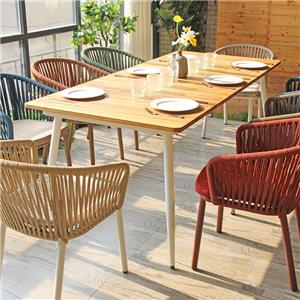
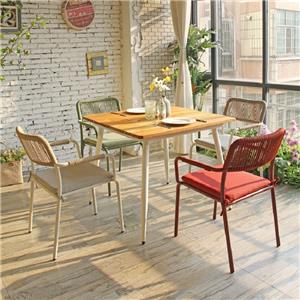
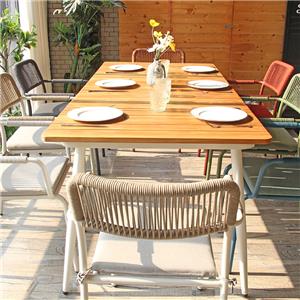
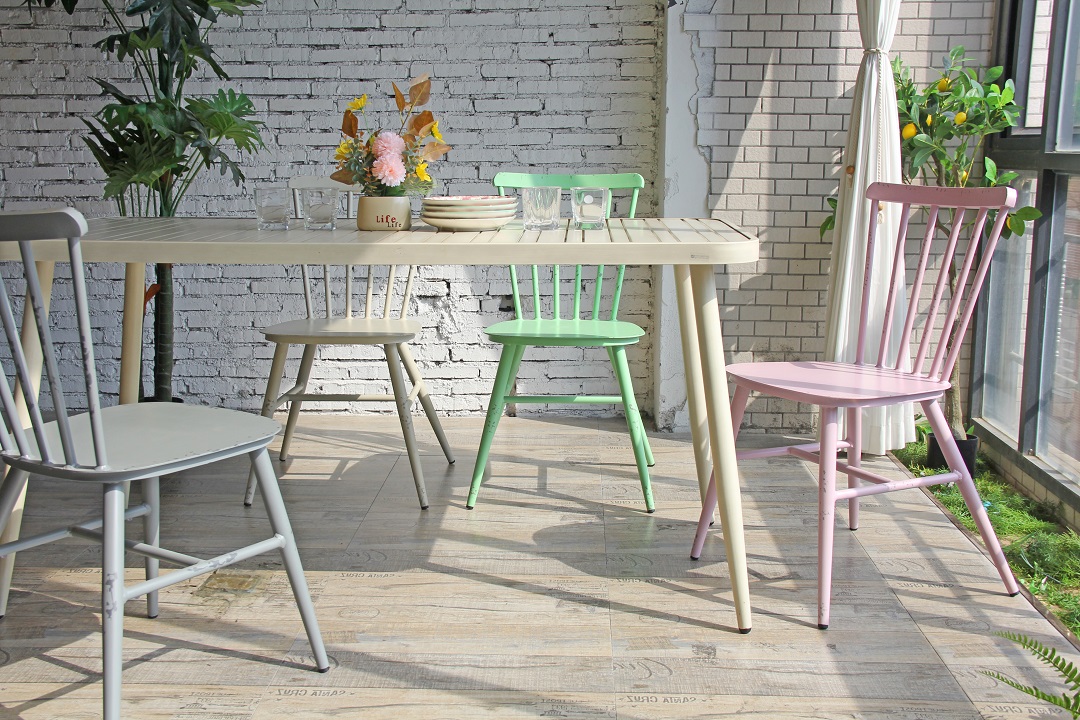
Aluminum behaves differently at the material level. It does not contain iron in the same form, so it does not rust in the conventional sense. A high-quality Aluminum Outdoor Furniture frame with a properly applied powder coat adds a second layer of defense: the coating blocks UV degradation and abrasion while the aluminum beneath remains unaffected even if a deep scratch exposes bare metal[reference:2]. For commercial buyers, this is not a minor convenience. It is the difference between a frame that can be pressure-washed, rained on, and stored without climate control, and one that requires inspection twice a year and touch-up painting whenever the finish is compromised[reference:3].
This is why Durability Of Aluminum Outdoor Furniture is often discussed in terms of absence of failure rather than heroic resistance. The material does not fight the environment; it ignores it. Aluminum frames can be left outside year-round without structural compromise, and cleaning requires nothing more than soapy water and a soft cloth. For a wholesale buyer distributing into multiple climate zones, that consistency simplifies inventory planning considerably.
Weight, Freight, and the Supply Chain Reality
Durability is not only about weather. It is also about how a product survives the journey from factory to retailer to end user, and how efficiently it moves through each step. Here, the weight gap is substantial. Wrought iron weighs roughly three times as much as aluminum per comparable piece, and aluminum outdoor furniture typically weighs 40–60% less than wrought iron equivalents[reference:4].
That difference cascades through your cost structure. A heavier frame increases freight cost per container. It makes warehouse handling slower and more labor-intensive. It discourages retailers from restocking frequently and raises the risk of damage during delivery and assembly. For hospitality buyers—hotels, resorts, restaurants—the operational burden is even more direct: staff cannot easily reconfigure a terrace or move furniture for cleaning when every chair requires two people.
Aluminum’s lighter weight does introduce one trade-off: in exposed, high-wind locations, a very light frame may need anchoring or strategic placement. But for the vast majority of retail and commercial settings, the practical advantage of a frame that one person can reposition safely outweighs the stability benefit of dead weight. And for buyers sourcing Aluminum Outdoor Furniture at volume, the freight savings are measurable on every order—not just a spec-sheet talking point.
Structure, Strength, and the Climate-Matching Framework
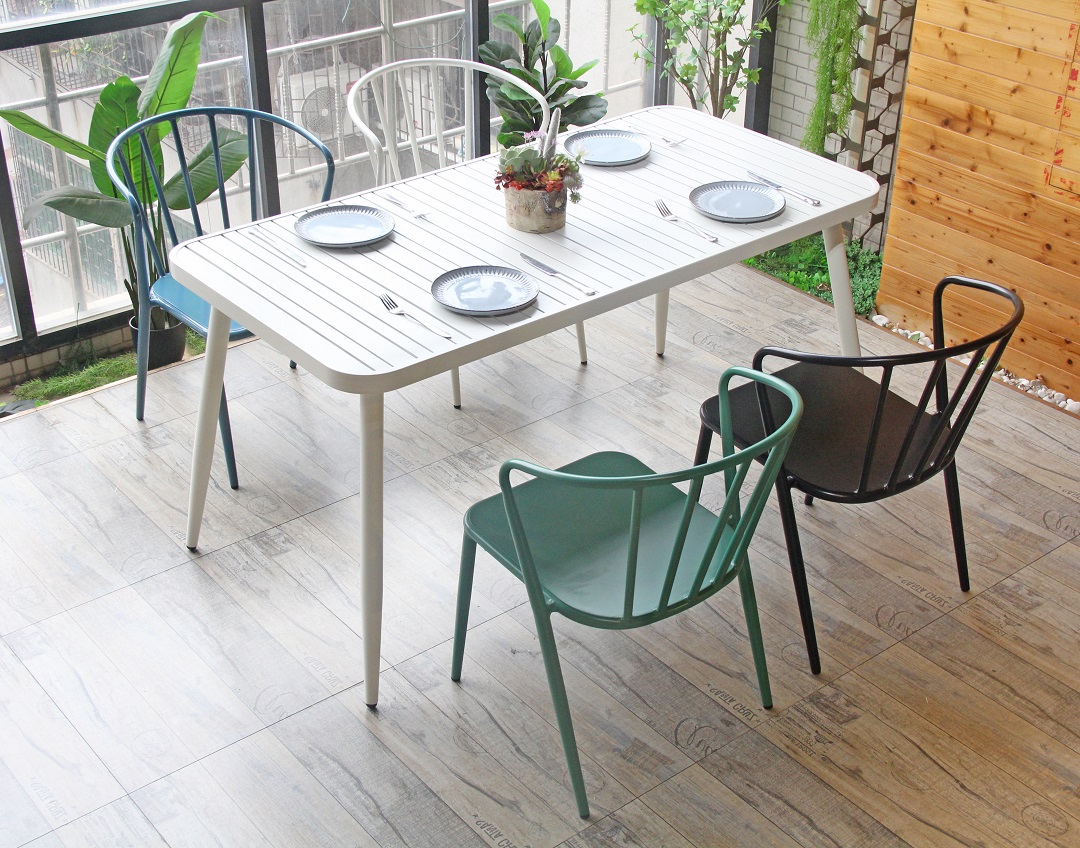
Neither material is structurally fragile when properly specified, but they express strength differently. Wrought iron is malleable and impact-resistant; in ornate designs, it can be repaired rather than replaced when damaged. Cast aluminum delivers a similar ornamental presence at a fraction of the weight, with enough rigidity to avoid the hollow, tinny feel that plagues low-grade tubular frames. The meaningful distinction for B2B buyers is not “which is stronger,” but “which strength profile fits the product’s use case.”
A Practical Climate-Matching Guide
For coastal, humid, and high-rainfall markets, aluminum is the lower-risk specification. Salt spray accelerates corrosion on iron-based materials far more aggressively than on aluminum, and the maintenance requirements of wrought iron become difficult to enforce once the product leaves the retailer’s floor[reference:5].
For wind-exposed ground-level installations where furniture is rarely moved and visual heft is part of the selling proposition, wrought iron can still be a defensible choice—provided the buyer understands and accepts the finish-maintenance cycle.
For high-turnover commercial environments—hotels, cafés, rental properties—aluminum’s light weight, rust immunity, and low-maintenance finish make it the more operationally efficient material, even if the upfront unit cost is not always the lowest.
Why Aluminum Has Become the Export-Grade Default for Serious Buyers
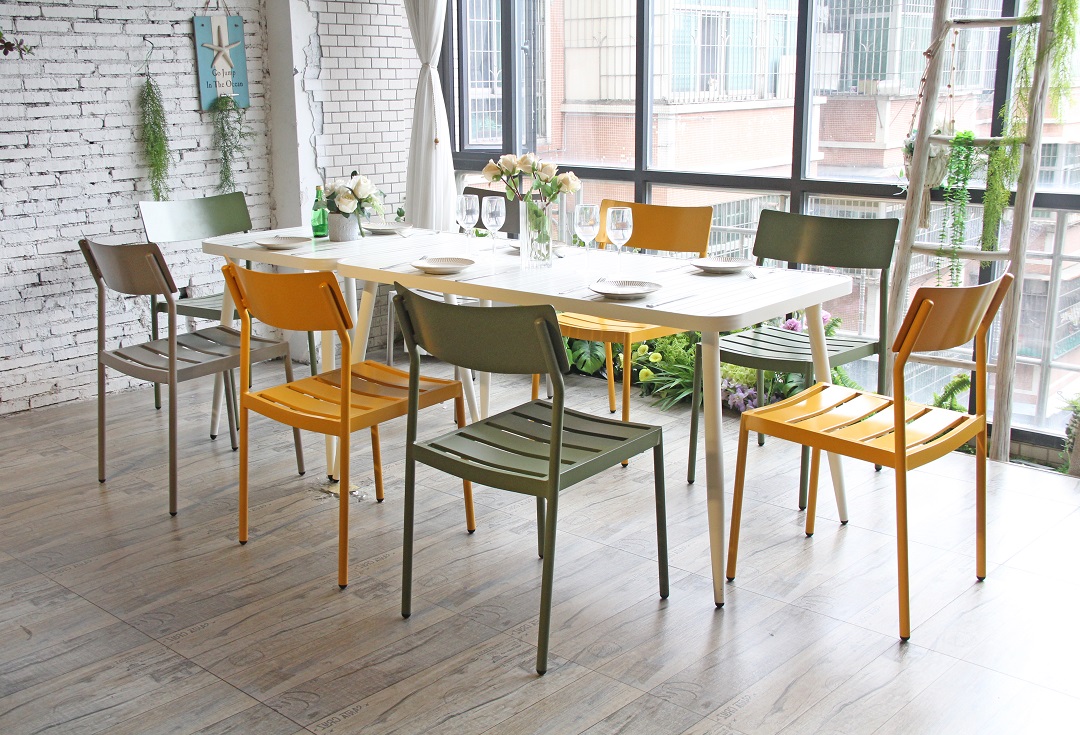
The B2B sourcing market has already voted with its order books. Powder-coated aluminum is the dominant export-grade frame material for outdoor furniture, and the reasons are structural rather than fashionable. It is rustproof, accepts a wide range of finishes—including textured, wood-grain, and matte stone effects—and keeps freight weight manageable. Wall thickness is the specification that separates durable aluminum from disposable aluminum: 1.2 mm is acceptable for residential dining chairs, while 1.6–2.0 mm is the appropriate range for loungers, hospitality stacking chairs, and any piece that will be moved daily.
This is also where the distinction between a generic supplier and an Aluminum Outdoor Furniture Factory becomes commercially relevant. A factory that understands export-grade wall thickness, powder-coat adhesion standards, and salt-spray test expectations is not simply selling a frame—it is reducing the probability that your next container generates a QC dispute or a retailer chargeback. For buyers evaluating suppliers, the questions to ask are concrete: What is the aluminum grade? What is the wall thickness in writing? What salt-spray hours does the finish achieve? A supplier who cannot answer those questions precisely is telling you something important about their process discipline.
The Commercial Verdict: Durability That Shows Up in Your Margin
Wrought iron has a legitimate place in the outdoor furniture market. It carries old-world character, exceptional heft, and a visual permanence that certain customer segments genuinely value. But from a wholesaler or retailer’s perspective, that value comes with a maintenance tail, a freight penalty, and a higher probability of finish-related after-sales friction. Aluminum wins the commercial durability comparison not because it is indestructible, but because its failure modes are fewer, milder, and easier to manage across the product lifecycle.
A durable outdoor furniture program for 2026 and beyond is one that minimizes the variables a retailer cannot control after the sale. Aluminum’s rust immunity, low-maintenance finish, and lighter freight profile do exactly that. The material does not require the end customer to develop new skills. It does not punish a scratched frame with progressive corrosion. And it allows you to ship more sellable units per container without trading away structural integrity—provided the specification is correct from the start.
Before You Lock In Your Next Outdoor Furniture Order
We work with importers, distributors, and retail buyers who need a material partner, not just a price list. If you are evaluating aluminum for your next season—or comparing it against an existing wrought iron program—the fastest way to a confident decision is a retail-ready specification review.
Send us your target market, climate exposure, and product category, and our team will return a commercial durability brief covering:
Recommended aluminum grade and wall thickness for your specific SKUs;
Powder-coat and salt-spray performance expectations for your destination market;
A side-by-side landed-cost comparison against a wrought iron equivalent, including freight weight impact;
A sample and finish swatch plan so you can test the product against your retail channel before committing to volume.
We are an Outdoor Furniture Manufacturer and Aluminum Outdoor Furniture Factory built around export-grade production, and we would rather help you specify the right frame now than troubleshoot the wrong one after the container arrives. Share your requirements through the inquiry form on our site, and we will respond with a specification brief tailored to your market—not a generic catalog.